



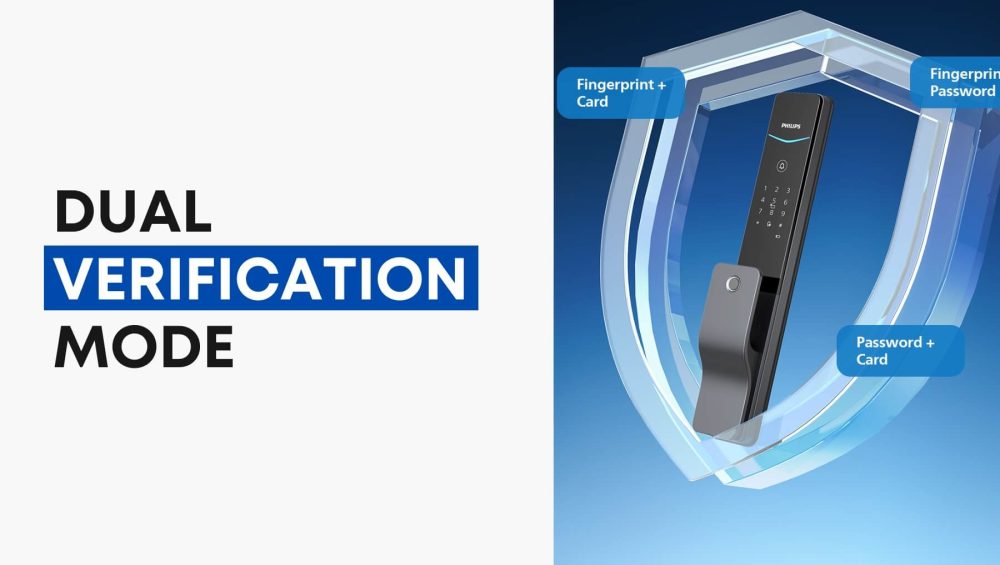
When summer holidays or school breaks arrive, securing your home becomes just as important as booking flights or finding pet sitters. With Dubai’s fast-growing reliance on smart home technology, Philips EasyKey smart locks are at the forefront of modern home security. Among their many features, Dual Verification Mode stands out as an advanced layer of protection that gives homeowners peace of mind.
In this guide, we’ll explain what dual verification mode is, how to enable it, what limitations it has, and why it can make all the difference in safeguarding your property.
What Is Dual Verification Mode?
Philips EasyKey locks typically offer two modes: General Mode and Dual Verification Mode.
- General Mode: The door can be unlocked with any single access method such as fingerprint, PIN code, RFID tag, or face recognition (depending on the model).
- Dual Verification Mode: Unlocking requires two access methods in combination (for example, fingerprint + PIN, or fingerprint + RFID card). This dramatically reduces the risk of unauthorized access, even if one credential is compromised.
For example:
- The Philips DDL702-8HW Facial Smart Lock allows combinations like face + fingerprint or face + PIN code.
- The Philips DDL702-1HW requires both fingerprint and PIN code together before the door unlocks.
This added layer makes it nearly impossible for intruders to bypass your entry system.
How to Enable Dual Verification Mode
You can activate the mode in two simple ways:
- Directly on the Lock – Use the lock’s onboard menu following the instructions in your product manual.
- Philips EasyKey App – Through the mobile app, you can enable dual verification with just a few taps.
Both methods are user-friendly, but always double-check your settings to ensure the feature is active before traveling.
Can I Still Use the App to Unlock Under This Mode?
No. When Dual Verification Mode is enabled, unlocking requires physical verification at the lock itself (via fingerprint, PIN, RFID, or face).
- App-based Bluetooth or Wi-Fi unlocking is disabled.
- Temporary PIN codes (e.g., 30-minute guest codes) also become inactive.
This ensures that only those who can physically present two valid credentials at your door can gain entry.
Other Security Features of Philips EasyKey Locks
Dual Verification Mode is just one of several security enhancements built into Philips smart locks. Other features include:
- C-Level Lock Cylinder – One of the highest-rated anti-picking cylinders in the industry.
- Multiple Alarms – Intrusion, tamper, and low-battery alerts.
- Hidden PIN Code – Enter random digits before or after your actual PIN to prevent shoulder-surfing.
- Forced Lock Mode – Adds another protective layer if suspicious activity is detected outside your home.
When combined with dual verification, these features create a multi-layered security system far superior to traditional deadbolts.
Why Use Dual Verification Mode?
- Enhanced Protection: Adds a second line of defense against intruders.
- Peace of Mind While Traveling: Perfect for holiday seasons when homes are left unattended.
- Family Security: Parents can ensure kids’ access is more controlled and secure.
- Professional Use: Ideal for rental properties, holiday homes, and offices where access needs stricter monitoring.
Final Thoughts
Philips EasyKey smart locks already set the benchmark for digital home security in Dubai and across the UAE. By enabling Dual Verification Mode, you’re not just upgrading your lock—you’re fortifying your entire home security system.
Whether it’s keeping your family safe during vacations or securing rental properties against unauthorized entry, this feature ensures maximum protection with minimal hassle.