



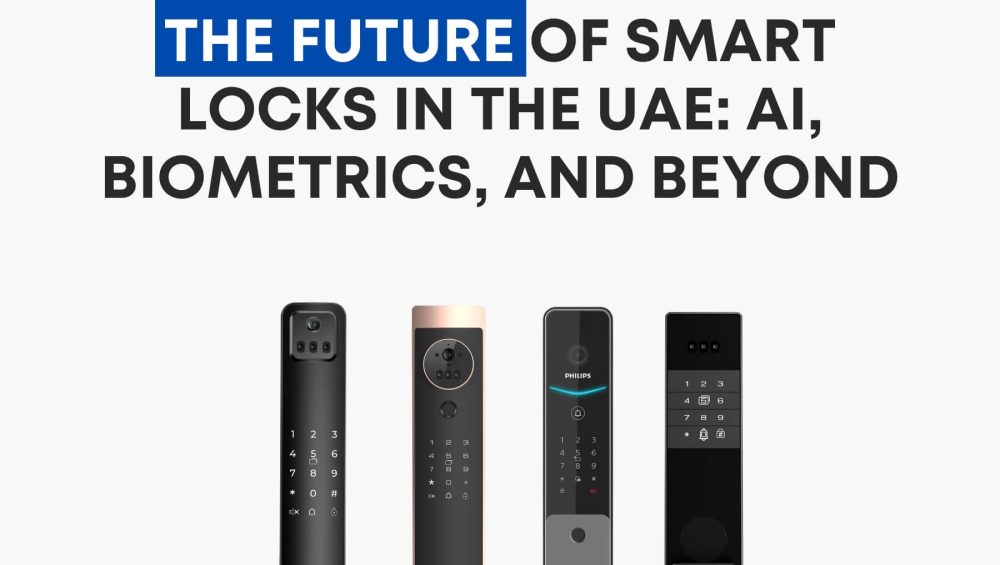
In a region that celebrates both heritage and innovation, the United Arab Emirates (UAE) is quickly emerging as a global hub for smart security technologies. Among these, smart locks have evolved from novelty to necessity—merging biometric precision, artificial intelligence (AI), and the Internet of Things (IoT) into daily life.
As we peer into the future, smart locks are no longer just about convenience. They are becoming the central nerve of the connected home—learning, adapting, and protecting with more intelligence than ever before.
The Current Landscape: A Nation Embracing Smart Locks
Smart home adoption in the UAE is accelerating rapidly. According to StatX, 40% of all locks sold in the UAE in 2023 were smart locks—a figure projected to surpass 55% by 2026. This surge is fueled by rising consumer demand for:
- Remote access and monitoring
- Integration with smart ecosystems
- Enhanced control over property entry
Brands like Philips are leading this charge with models like the Philips EasyKey DDL601‑E, which combines semiconductor fingerprint scanning, PIN code access, and Wi‑Fi-based remote control, all packaged in a sleek, weather-resistant design suitable for UAE villas and city apartments alike.
AI and Predictive Security: The Smart Lock Brain
Artificial Intelligence (AI) is set to redefine what smart locks can do. Already, AI-enhanced locks are capable of:
- Behavioral Learning: Learning typical access patterns and flagging anomalies (e.g., access attempts at 3 a.m.)
- Voice-activated Automation: Through systems like Alexa or Google Home, users can say: “Secure the house” and trigger a series of smart actions—lock the doors, dim lights, and activate indoor cameras.
- Geo-fencing: Detect when the homeowner is approaching and unlock the door automatically.
Take, for example, Philips DDL702‑FVP, which features AI-assisted facial recognition in some markets. When paired with smart home hubs, this lock can analyze usage trends, send alerts, and even trigger lockdowns when suspicious behavior is detected.
Biometric Evolution: Fingerprint Is Just the Start
Biometrics are rapidly becoming the gold standard for secure access. Today’s fingerprint sensors, such as those used in the Philips 801 and 602 series, can unlock your door in under 0.5 seconds with a single grip.
But what’s next?
- Palm vein recognition: Already featured in Philips’ upcoming models, this method scans subdermal vein patterns for unmatched precision.
- Facial and iris scanning: Currently in R&D and enterprise use, these technologies are likely to trickle into premium home locks soon.
Biometric smart locks also solve a fundamental flaw in traditional security: the risk of lost keys, copied cards, or leaked PINs.
The Power of 5G and IoT: Unlocking Real-Time Connectivity
Smart locks are only as strong as their network. With 5G connectivity and IoT expansion, smart locks in the UAE will become:
- Instantaneous in response: No more lag when unlocking remotely from another city.
- Deeply integrated: Able to speak to other devices—like surveillance cameras, lighting systems, and voice assistants.
- More autonomous: AI-powered locks could auto-secure when no one is home, or send alerts to authorities in emergencies.
Picture this: A courier arrives at your villa in Abu Dhabi while you’re at your office in Sharjah. With a Philips smart lock connected via 5G, you can view them via live cam, unlock the door temporarily, and re-lock it—all within seconds.
Data Protection and Regulatory Oversight
Innovation must be matched with responsibility. The UAE’s Telecommunications and Digital Government Regulatory Authority (TDRA) has introduced strict protocols to secure IoT and smart devices, including locks.
Still, user vigilance matters:
- Use encrypted Wi‑Fi and strong passwords
- Keep lock firmware up to date
- Choose trusted brands with clear privacy policies
Philips, for example, offers AES-128 bit encryption across its premium lock models, ensuring secure communication between device and app.
Why Philips Smart Locks Are Future-Ready
When assessing which smart locks are truly prepared for this AI-powered future, Philips models continue to impress:
| Model | Key Innovation | Water Resistance | AI Features |
| Philips EasyKey DDL801‑5HBS | Gen 3 mortise + push-pull design + fingerprint | IP65 | Predictive usage alerts |
| Philips DDL702‑FVP | Facial recognition + PIN + RFID | IP55 | App-based behavior analysis |
| Philips DDL608‑5HWS | Slim body, IP65 waterproof lock | IP65 | Remote monitoring + alerts |
Final Thoughts: Unlocking What’s Ahead
The UAE’s smart future is already unfolding, and smart locks sit at the heart of that transformation. With AI, biometrics, 5G, and responsive apps converging, homeowners and renters can look forward to unprecedented levels of security, personalization, and control.
Smart locks are no longer accessories—they are essential. For those in the UAE who value safety, modernity, and forward-thinking technology, investing in a premium, future-ready smart lock like Philips EasyKey is not just smart—it’s strategic.
Are you ready to unlock the future?