



Dubai’s skyline may be futuristic, but many homeowners still rely on traditional locks — heavy, mechanical, and often inconvenient.
While modern living has embraced automation, some property owners remain cautious about adopting smart locks, citing trust, privacy, or technical concerns.
Yet, the benefits of digital locks — from keyless access to real-time security control — make them a natural evolution in home protection. This article explores why resistance exists and how Dubai homeowners can confidently transition to smart, secure living.
Understanding Why Homeowners Hesitate
- Comfort with the Familiar
Many long-time residents value the reliability of mechanical locks, seeing them as simpler and more tangible. - Concerns About Hacking or Malfunction
With any connected technology, there’s worry about digital breaches or system failures — especially for entry points like doors. - Limited Awareness of Features
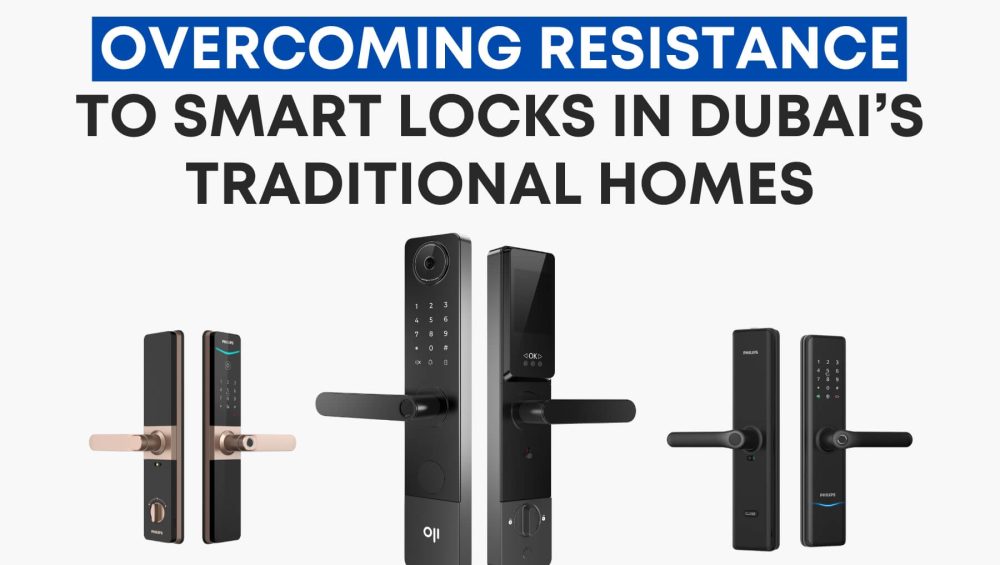
Some homeowners are unaware that modern smart locks, such as the Philips EasyKey 720 FVP-7HWS and Oji Amber Smart Lock, are built with military-grade encryption and backup power systems that ensure reliability and safety.
The Shift Toward Modern Security
Dubai’s newer villas and smart communities are setting a new standard for residential security.
Today’s smart locks combine advanced encryption, biometric precision, and mobile app control to simplify access without compromising safety.
For example, the Philips DDL720-MVP-17HWS uses palm vein recognition for unmatched identity accuracy, while the Oji EVO Smart Door Lock allows app-based access and real-time entry logs — giving homeowners full control even when away from home.
These technologies aren’t just convenient; they represent the next step in secure living.
Addressing Common Concerns
- “What if the battery dies?”
Smart locks like Philips and Oji include low-battery alerts and emergency USB power options, ensuring you’re never locked out.
- “Can it be hacked?”
Modern locks use AES 128-bit encryption — the same standard trusted by banks and government systems. Access data is securely stored and never transmitted without encryption.
- “What if my phone is lost?”
You can still unlock your door via fingerprint, PIN code, or RFID card. Multi-access options guarantee flexibility and control.
Building Trust Through Real Experiences
Early adopters in Dubai’s villa communities have already proven how seamlessly smart locks fit into daily life.
Homeowners appreciate the ability to grant digital access to family or maintenance staff without handing over keys — a small change that brings major peace of mind.
Brands like Philips and OjiSmart have made this transition effortless by offering professional installation, local warranty, and UAE-based support, addressing the exact pain points that caused hesitation in the first place.
The Future of Home Security in Dubai
Dubai’s vision of smart, connected living extends beyond skyscrapers — it starts at home.
Smart locks aren’t a futuristic luxury anymore; they’re a practical upgrade for homeowners who value both security and simplicity.
Whether it’s the Philips 720 FVP-7HWS with video intercom or the Oji EVO with real-time app tracking, these locks prove that convenience and control can coexist beautifully.
Conclusion
Overcoming resistance to smart locks begins with understanding their purpose — not to replace trust, but to enhance it.
Modern smart locks from Philips and OjiSmart offer keyless access, biometric precision, and mobile control, making security both smarter and more human.
For Dubai homeowners ready to take the next step in home innovation, the key to peace of mind isn’t a key at all — it’s smart technology designed for the future.