



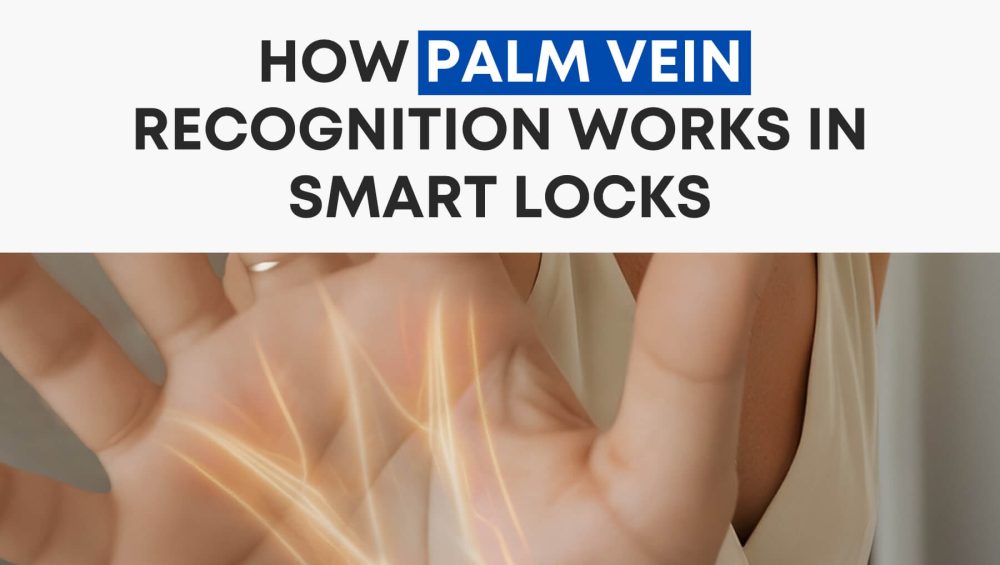
Palm vein recognition sounds like science fiction, but it’s actually a practical biometric method that’s becoming popular in premium smart locks. The basic idea is simple: instead of reading the surface of your skin (like a fingerprint), the lock verifies the unique pattern of veins inside your palm. That makes it fast, clean, and very hard to fake.
This article breaks down how it works, why it’s different from fingerprints and face recognition, and what homeowners should know before buying a palm vein smart lock.
What Palm Vein Recognition Is
Palm vein recognition is a biometric technology that identifies a person by mapping the vein pattern under the skin of the palm. Those vein patterns are complex and highly unique, even between identical twins.
Unlike a fingerprint sensor that scans ridges on the surface, palm vein systems look “inside” the hand. That single difference changes everything about security and reliability.
LSI keywords naturally related to this topic: palm vein smart lock, biometric door lock, vein pattern recognition, contactless biometric, anti-spoofing biometrics, smart lock authentication, biometric access control.
How Palm Vein Recognition Works Step by Step
1. The lock emits near-infrared light (NIR)
A palm vein sensor uses near-infrared light because it interacts well with blood vessels. When you place your palm near the sensor, the device shines NIR light into your skin.
2. Hemoglobin absorbs the infrared light
Veins contain deoxygenated hemoglobin, which absorbs near-infrared light more than the surrounding tissue. This creates strong contrast between veins and other skin layers.
3. The sensor captures an “internal map” of your veins
A camera or optical sensor records the reflected infrared pattern. The result is an image that shows the vein structure as dark lines. Think of it like an internal blueprint.
4. The lock converts the vein pattern into a digital template
The image is processed into a mathematical representation (a biometric template). The lock does not store a normal photo of your palm; it stores a coded template.
5. During unlocking, it matches your template
When you present your palm again, the lock compares the live scan to the stored template. If the match is within an acceptable threshold, it unlocks.
This all happens quickly, usually in under a second on premium models.
Why Palm Vein Recognition Is Hard to Fake
Palm vein recognition is often considered one of the strongest consumer biometric methods because it includes built-in “liveness” advantages:
- The lock is reading blood vessel patterns beneath the skin, not a surface image.
- It’s much less vulnerable to surface artifacts like dirt, sweat, scratches, or worn fingerprints.
- A photo of a hand won’t reproduce the internal vein absorption pattern the sensor expects.
No biometric is “perfect,” but palm vein recognition raises the bar significantly compared with many fingerprint sensors.
Palm Vein vs Fingerprint vs Face Recognition
Palm Vein vs Fingerprint
Fingerprint scanners are common and convenient, but they can struggle with:
- Wet fingers (after wudu, washing hands, pool/gym)
- Dry skin and cracks
- Worn fingerprints from manual work
- Dust and residue on the sensor
Palm vein recognition is usually more consistent because it’s reading beneath the surface and is typically contactless or near-contact.
Palm Vein vs Face Recognition
Face recognition is extremely convenient, but it depends heavily on:
- Lighting conditions (especially at night)
- Camera quality
- Angle and distance
- Changes like masks, sunglasses, or hats
Palm vein is less affected by lighting and tends to be more private (you’re presenting a hand to a sensor rather than being continuously “seen” by a camera).
What Homeowners Should Know Before Choosing a Palm Vein Smart Lock
1. Placement and distance matter
Palm vein sensors usually require you to hold your palm at a specific distance. If the lock is installed too high or too low, users might struggle to present the palm naturally.
2. Enrollment quality affects daily performance
When you register your palm, it’s important to follow the setup prompts carefully. A good enrollment scan leads to faster and more reliable unlocking later.
3. Power and battery management still matters
Palm vein is just one access method. The lock still relies on power for scanning, processing, and the motorized unlocking. Always consider:
- battery capacity and battery alerts
- emergency power option (like USB backup)
- mechanical backup (if included)
4. Data storage and privacy questions are valid
A good smart lock should store biometric data as encrypted templates and protect it with strong security practices. In general:
- Avoid locks from unknown brands with unclear privacy policies
- Prefer vendors that can provide documentation and after-sales support
- Change admin settings and app passwords immediately after setup
Who Palm Vein Smart Locks Are Best For
Palm vein recognition is especially useful for households that care about fast, clean, secure access:
- Villas with frequent visitors or staff access
- Families with children who lose keys
- Homes where fingerprints often fail (wet, dusty, worn skin)
- Users who want a premium biometric method without relying on cameras
- Holiday home owners who want strong security with simple daily access
Common Questions About Palm Vein Recognition in Smart Locks
Is palm vein recognition safe for eyes or skin?
The near-infrared light used is low-power and designed for consumer devices. It is not the same as harmful radiation. Still, buy from reputable brands.
Does it work if my hand is wet?
Generally, it performs better than fingerprint sensors in wet-hand situations, but water droplets can still interfere depending on the sensor design. Drying your palm improves speed.
Can it unlock with gloves on?
No. The sensor must read vein patterns through skin tissue, so gloves block it.
Is it more accurate than fingerprint?
In many real-world conditions, it can be more consistent than fingerprints, especially for users with wet hands, worn fingerprints, or sensor contamination. Exact accuracy depends on the lock model and sensor quality.
Final Take
Palm vein recognition works by using near-infrared light to capture the unique vein pattern inside your palm, converting it into a secure biometric template, and matching it instantly when you present your hand again. Because it reads internal features rather than surface details, it’s often more reliable and harder to spoof than basic fingerprint systems.
If you want a biometric smart lock that feels modern, stays consistent in daily use, and raises the security bar, palm vein recognition is one of the best options available today.